
For many of us, protecting our data is one of the things that’s pushed to the back burner—bumped down the mental to-do list by the rising cost of living, bills, and everyday concerns.
What we might not realize is that data privacy—a vague term that sounds borrowed from legal manuscripts—does in fact have a daily impact on our lives. Most “Terms of Service” agreements hide clauses that allow companies to profit from your data—from the WIFI you sign onto at Starbucks to your shopping history on Instacart. Nearly every website you visit greets you with a cookie consent pop-up, asking for permission to track your behavior.
This year, for Data Privacy Week, we’re going to break down what data privacy really means, how it differs from data security, and the top strategies for keeping your information safe.

What is personal data?
Personal data is any piece of information that relates to you as an individual: anything that could be used to identify who you are, where you are, what you do, or what you’re like.
Some of it is obvious: your name, your home address, your date of birth, your email address, your phone number, and your SSN, passport and driver license numbers. But a lot of it is less obvious than you’d expect. Your IP address is personal data, and so is your location history, browsing history, purchase history, the photos you appear in, your voice, your face, your fingerprints and x-rays, your vehicle registration number or title number, your mother’s maiden name, and even the device you’re using to read this.
The simplest way to think about it is if a piece of information could be used either on its own or combined with other information to identify, locate, or build a picture of you as a specific person, it’s personal data.
Personal data is valuable. It tells companies what you want to buy, what you believe, who you know, how much you earn, and what you’re worried about. That makes it something worth collecting, trading, and – in the wrong hands – exploiting.
What is a digital footprint?
Your digital footprint is the trail of data you leave behind every time you do something online. It’s sometimes called your digital exhaust because, just as engine exhaust is residue from using a car, digital exhaust is residue from using the internet. Your digital footprint contains all that personal data we just discussed.
Every website you visit, every search you run, every post you like, every app you open, every purchase you make, and every location you visit with your phone in your pocket adds another trace to that trail. Most of it happens without you actively doing anything: your devices are quietly logging and transmitting data in the background while you get on with your day.
The result is a detailed, persistent record of who you are, what you do, and what you’re interested in. You don’t own this record, you can’t fully see it, and in most cases you can’t delete it.
What is online privacy and why does it matter?
You might say, “I have nothing to hide,” or “Privacy tools are only for criminals,” but online privacy (also called data privacy) is about your right to control your personal information and how it’s used.
Data privacy matters because it protects your fundamental right to privacy and:
- It protects you from direct harm. Stolen personal data enables identity theft, financial fraud, blackmail, and scams. These crimes happen to millions of people every year and can take years to recover from.
- It limits who has power over you. The more data companies and governments hold about you, the more leverage they have. That data determines whether you get a loan, what price you’re charged for insurance, whether your job application makes it past the first filter, and what content you’re shown. Decisions that affect your life are being made about you, using your data, without your knowledge or input.
- It protects your autonomy. When AI systems know your habits, fears, and desires better than you do, they can predict and shape your behavior. That’s the business model of every major social media platform. Targeted content, addictive design, and personalized advertising are all built on the ability to influence you using your own data against you.
- It preserves your freedom to think and act without being watched. People behave differently when they know they’re being observed. Mass surveillance, whether by corporations or governments, has a chilling effect on free speech, political dissent, and personal expression, even among people who have done nothing wrong. Privacy isn’t about having something to hide. It’s about having the space to think, question, and exist without being monitored.
- It protects the people around you. Your data doesn’t just reveal things about you; it reveals things about your family and friends and anyone else connected to you. Sharing your location, contacts, or communications affects other people’s privacy too, whether they consented or not.
- It becomes more important over time. Data collected today doesn’t disappear. It can be stored indefinitely, repurposed, sold, leaked, or handed to a future government with very different intentions from the one that collected it. The privacy decisions you make now follow you around.
The “nothing to hide” argument oversimplifies the issue. Privacy isn’t a guilty person’s shield; it’s a condition for living freely. Every major human rights framework in the world recognizes it as a fundamental right and for good reason.
Tech and social media companies
Tech companies like Alphabet (Google), Meta, Amazon, Apple, Microsoft are giving you “free” access to their platforms and products in return for your personal information, time, and attention. Have you heard the saying, “If you’re not paying for the product, you ARE the product?”
Part of your digital footprint is also what’s known as your social graph and your interest graph. A social graph is a digital map of who you know (your relationships within a social network including your friends, family, coworkers, etc.), while an interest graph maps what you like (it connects you to other people based on shared interests, hobbies and topics, rather than personal relationships).
Tech companies use all this personal data to:
- Sell ads to third-party advertisers that serve you targeted ads (those scarily coincidental ads that pop up within seconds of your search for a product)
- Control the content you see, including news feeds and social media posts
- Influence your political decisions (read up on Cambridge Analytica for a famous example).
Importantly, many users don’t know or understand how their data is being used. Most privacy policies are long, vague, and unreadable, and user consent is complex. What’s more, many apps use dark patterns: design tricks that pressure users to share more information and buy more products than they want to.
How to Protect Your Information Online in 2026

JoseMonkey is very good at finding people. With their permission, of course.
As a self-styled “open source intelligence researcher” operating on TikTok, Instagram and YouTube, JoseMonkey’s specialty is pinpointing a person’s exact global location using only the non-descript video of their face, which they send him first.
His posts — most of them documenting his lighthearted digital manhunts — gain hundreds of thousands of views each, with nearly 20 million total likes over five years.
To do this work, JoseMonkey focuses on the background details of the videos he’s sent — like the landscape and visible street signs — and uses publicly available tools like OpenStreetMap. But he only tries to “find people who ask to be found,” JoseMonkey told KQED’s Close All Tabs podcast.
How much danger might my personal privacy be in?
You don’t need to guard yourself against every threat that exists, explained Eva Galperin, the director of cybersecurity at the Electronic Frontier Foundation.
The only way to really do that is to “live as a hermit on a mountain and fling all of your devices into the sea,” she said.
Instead, Galperin said, it’s more helpful to think about what advocates like her call “threat modeling”: What you want to protect and who you want to protect it from.
How can my posts and videos reveal too much about my location?
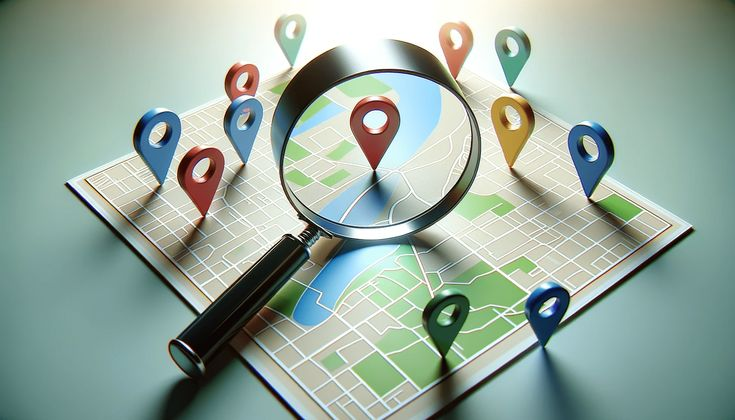
Always review what you are posting before you post it, JoseMonkey said — even though “many people” never take this step.
“They record something, and they just press send,” he said. And a person may not even realize “that there was some big thing that they forgot that they didn’t want to include,” he warns, until the post is out there.
This could, for example, be a visible street sign behind you, which can be easily remedied by cropping it out or covering it with text or a sticker — or just rerecording the vide
FAQ’s
1. What is online privacy and security?
Online privacy protects your personal information, while online security protects your accounts, devices, and data from unauthorized access.
2. Why is online privacy important in 2026?
It helps protect sensitive information such as passwords, financial details, personal messages, and browsing activity from misuse.
3. How can I protect my personal data online?
Use strong unique passwords, enable two-factor authentication, update your devices, and avoid sharing unnecessary personal information.
4. What makes a strong password?
A strong password should be long, unique, and difficult to guess, ideally using a combination of words, numbers, and symbols.
5. Should I use two-factor authentication?
Yes. Two-factor authentication adds an extra layer of protection even if your password is compromised.